TLDR: Conference committee can be chaotic. The best way to get updates is to be at the capitol in person. Watch for frequent updates on scheduled hearings.
How Conference Committee works for legislators
During conference committee, House and Senate conferees meet to reconcile differences and produce a final draft of each bill for the originating chamber. Hearings run in quick succession, and schedules change with little warning.
To an outside observer the process can look chaotic and opaque…and in many respects it is. If you have followed bills through the session, you may have seen draft amendments, often from the House, that set an effective date in the year 3000. That nominal change forces the measure into conference by creating a disagreement the chambers must resolve; without resolution, the bill does not take effect as intended.
On closer inspection, the structure is easier to understand. Conference exists in large part so the legislature can align individual measures with the overall budget. For much of the session, bills may advance on their merits within each chamber; in conference, leadership and finance can review the full package of pending legislation against fiscal limits. The finance and ways and means committees track aggregates throughout the session, but decisions at conference rest on bills that are closer to final form and have already cleared subject-matter committees. In practice, finance may also direct subject-matter committees to name which of their bills should advance in conference when leadership needs discrete choices.
Conference is also where the legislature consolidates overlapping bills. Conferees may treat one measure as duplicative of another, set one aside, and advance a single vehicle to avoid conflicting or redundant statutory language.
During that phase, committees meet repeatedly and coordinate on priorities: what to advance and what to trade to secure agreement.
What to expect from hearings
Public notice thresholds are greatly reduced from the usual 48 hours notice. Public oral testimony during conference committee is minimal. Committees often meet multiple times in a day and may defer action on a bill until related issues are settled. A bill nearing final disposition may appear on the schedule only once; more commonly, the same bill is calendared for several report-back slots in a single day.
Observers, including lobbyists and members, sometimes treat an oral announcement in the hearing as sufficient notice of the next step. Staff and leadership also post updates to the Capitol website, but those updates can trail the oral notice by a meaningful margin. A member might announce a hearing in one hour; the item may appear on the public schedule shortly before that time, after which the committee may further postpone or announce a decision. Under that pattern, the practical urgency of any given listed time is difficult to assess from the calendar alone.
Video streams are usually available, but they rarely match the clarity of attending in person.
Our recommendations
For time-sensitive, first-hand detail, attend conference committee hearings in person. While we understand that it’s not always feasible, attending in person gives you the most information in the timeliest manner, which can be helpful when bills are scheduled for a hearing two hours in the future.
For stakeholders who are not actively engaged in conference, with limited ongoing contact with legislators, little prospect of being consulted, and minimal influence on the outcome, following the public record through CivicNexus is an appropriate substitute until conference reports out.
Using CivicNexus
CivicNexus publishes bill and hearing updates as soon as we receive them from official sources. Our synthetic hearing process refreshes hearing notices on a ten-minute cadence. Bills in conference may often retain a Scheduled status and simply have the date change regularly; that pattern reflects how the Capitol calendars conference work, not an error on our side. Here’s a list of statuses from a bill that went through conference committee:
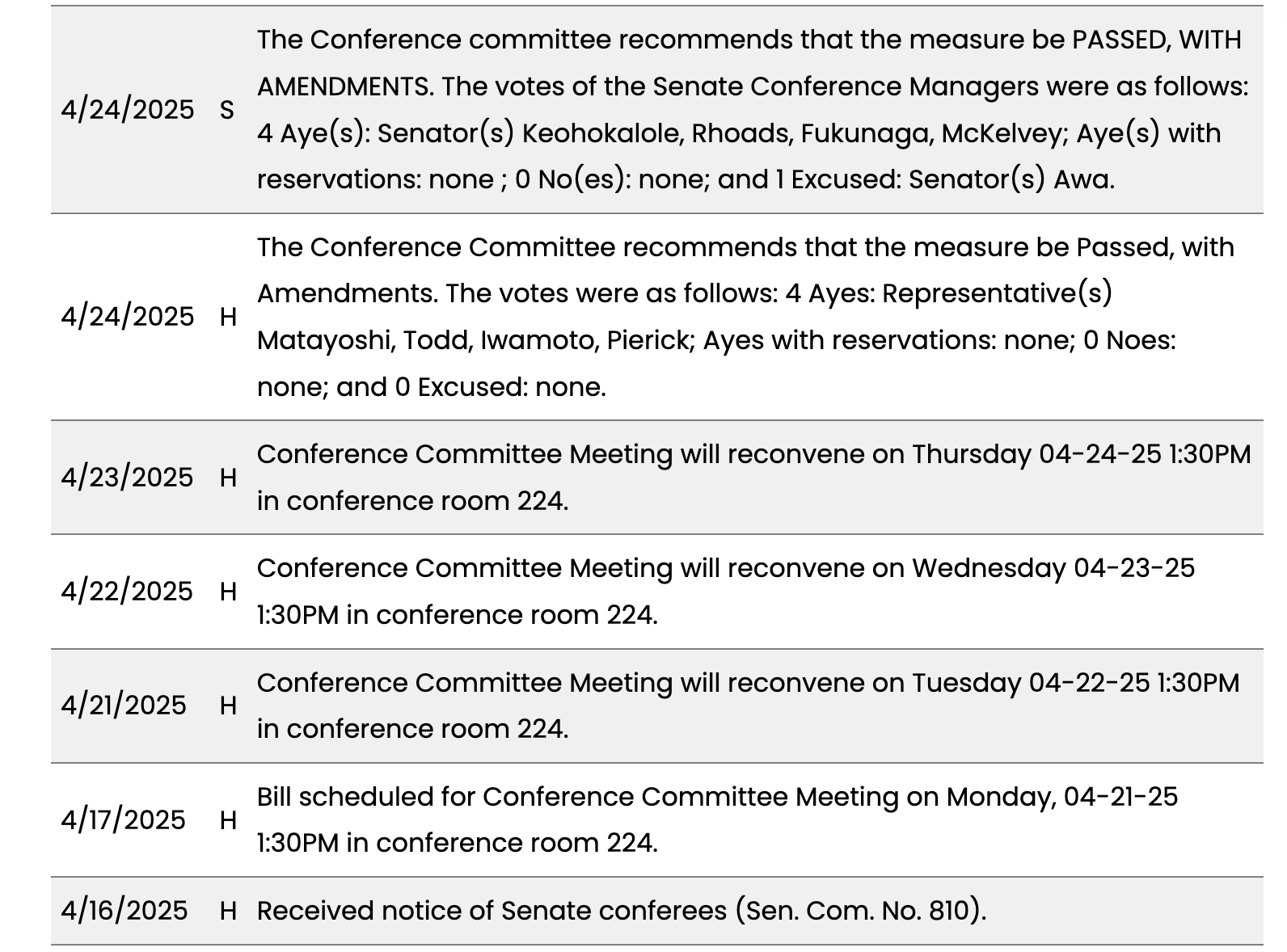
Source: HB70 (2025)